Learn how skilled manpower, strict safety standards, strong facility management, and sustainable construction practices help projects in Qatar and KSA succeed — practical steps Moon TCC uses to deliver quality, safety and long-term value.
Moon TCC delivers construction, MEP, manpower and facility solutions across Qatar and Saudi Arabia. In this single guide we’ll walk step-by-step through four core themes that matter to owners, contractors and facility teams:
- The role of skilled manpower in construction growth
- Why safety standards matter on every job
- How facility management extends building life
- Sustainability in construction — Moon TCC’s approach aligned with Qatar Vision 2030
Each section explains why it matters, how we put it into practice, and what results clients can expect.
1) The role of skilled manpower in Qatar’s construction growth
Why it matters
Skilled people are the engine of every successful project. In a fast-moving market like Qatar, quality workforce availability determines schedule reliability, workmanship, and compliance with technical standards.
Step-by-step implementation
- Define required trades & competencies. For each project we map needed roles (engineers, supervisors, electricians, welders, HVAC technicians) and the exact competency level (certifications, experience with specific systems or codes).
- Source certified candidates. We recruit locally and regionally, prioritizing NEBOSH/OSHA/Aramco-certified candidates for safety-critical roles and verified trade certificates for technical roles.
- Pre-mobilization training & induction. Before site entry every worker completes project-specific induction: site rules, safety, quality expectations, and technical briefings.
- Mentorship & supervision. Experienced foremen and project engineers mentor new hires and perform daily quality checks to accelerate learning curves.
- Performance tracking. We track KPIs (attendance, rework rates, productivity, near misses) and provide targeted training where gaps appear.
What clients get
- Faster mobilization with right-fit talent
- Reduced rework and defects
- Predictable timelines and lower overall labour cost
2) Why safety standards matter in every construction project
Why it matters
Safety isn’t a box to tick — it protects people, prevents stoppages, and preserves a contractor’s reputation and budget. A strong safety culture reduces accidents, insurance claims, and costly delays.
Step-by-step implementation
- Project risk assessment (pre-start). Identify hazards across phases (excavation, lifting, hot works, electrical) and set control measures before work begins.
- Tailored safety plan & toolbox talks. We develop a project safety plan aligned with ISO 45001 and provide daily toolbox talks focused on immediate risks.
- Mandatory certifications. All supervisory staff and critical operatives hold NEBOSH/OSHA certificates; specialized tasks require additional approvals (e.g., confined-space permits).
- On-site monitoring & reporting. Supervisors perform routine inspections; near misses and incidents are logged, analyzed, and used to improve controls.
- Behavioral safety & incentives. We run campaigns to reinforce safe habits and reward crews with outstanding safety records.
What clients get
- Fewer incidents and better regulatory compliance
- Higher workforce morale and retention
- Lower indirect costs from delays, fines, and reputational damage
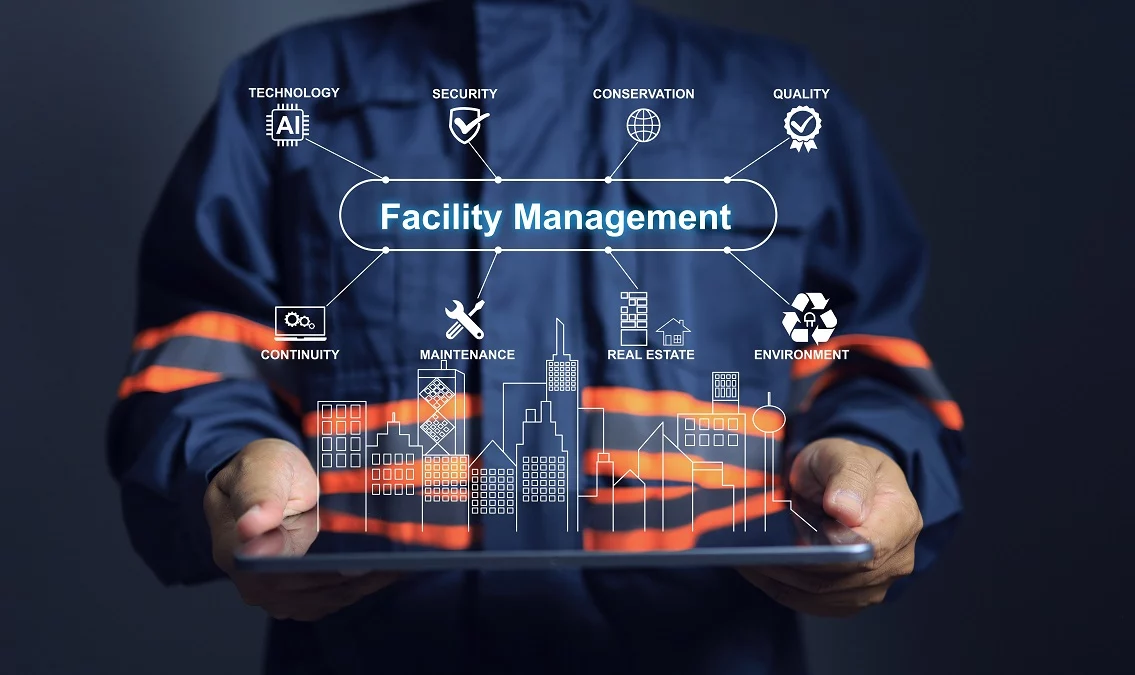
3) How facility management extends the life of your building
Why it matters
Handover is not the finish line — it’s when the real value challenge begins. Proactive facility management preserves asset value, reduces lifecycle cost, and keeps occupants satisfied.
Step-by-step implementation
- Handover with knowledge transfer. Provide comprehensive operation manuals, as-built drawings, warranties, and a 30–90 day support window to fix initial teething issues.
- Preventive maintenance plan. Create a schedule for inspections, cleaning, lubrication, and calibration of mechanical, electrical, and plumbing (MEP) equipment.
- Condition-based monitoring. Use periodic condition surveys and simple diagnostics to decide when to service vs replace — avoiding unnecessary downtime.
- Integrated FM team. One point of contact for maintenance, cleaning, security, and logistics ensures coordination and responsive service.
- Data & continuous improvement. Track maintenance KPIs (response time, downtime, cost per sq.m.) and optimize the plan over time.
What clients get
- Longer equipment lifecycles and fewer emergency repairs
- Predictable OPEX and lower total cost of ownership
- Better occupant comfort and asset valuation at resale or refinance
4) Sustainability in construction: How Moon TCC supports Qatar Vision 2030
Why it matters
Sustainable construction reduces environmental impact, supports national goals, and increasingly influences client and investor decisions.
Step-by-step implementation
- Sustainable materials & procurement. Specify low-emission and recycled materials where possible, and vet suppliers for environmental compliance.
- Waste minimization program. Sort and divert construction waste — concrete, metals, plastics — and reuse materials on site whenever feasible.
- Energy-efficient operations. Implement energy-efficient temporary services (LED site lighting, fuel-efficient plant) and recommend permanent building solutions (efficient HVAC, LED lighting).
- Water management. Adopt water-saving practices on site and advise on water-efficient fixtures to reduce long-term consumption.
- Community & workforce ethics. Practice fair recruitment, safe housing standards, and local training programs to ensure social sustainability.
- Measurement & reporting. Track waste diverted, energy used, and social KPIs; report them as part of project closeout and CSR disclosures.
What clients get
- Lower operational carbon and utility bills over the building’s life
- Stronger alignment with Qatar National Vision 2030 and Saudi Vision 2030
- Better public and investor perception — and often easier regulatory approvals
Conclusion & practical next steps
Moon TCC turns strategy into action by combining certified people, rigorous safety, integrated facility services, and sustainable practices. If you’re an owner, developer, or facility manager, here are simple next steps you can take:
- Audit your workforce readiness. Compare current manpower skills to project needs.
- Request a project safety gap analysis. Identify high-risk areas before mobilization.
- Ask for an FM transition plan at tender stage. Make handover and maintenance a contractual deliverable.
- Set sustainability targets early. Small changes in procurement and waste handling reduce long-term costs.